
What Emotional Healing Really Looks Like
Is Your Understanding of Healing Blocking Your Recovery?
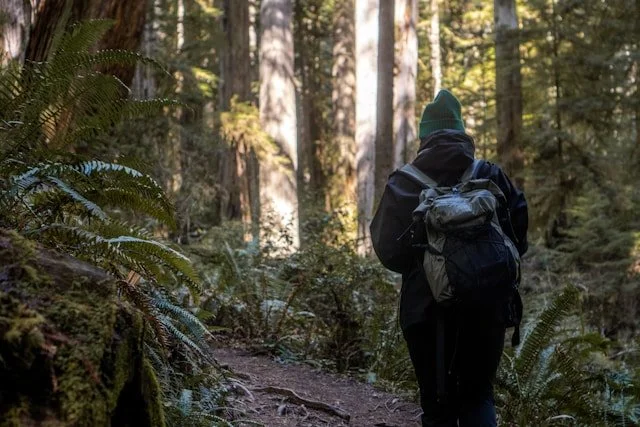
Healing rarely follows a straight path, but every step forward matters.
When we think about healing a physical injury, the steps are usually clear: rest, treatment, and time. But emotional healing is far less straightforward. When the wound is internal, invisible, and intertwined with our history, what does healing actually mean?
Many people come to therapy believing healing means they should stop thinking about what happened, stop feeling triggered, or finally "get over it." When that doesn't happen, it's easy to wonder if something is wrong.
The truth is, the way we define healing can sometimes become the very thing that keeps us feeling stuck.
Rethinking What It Means to Heal
In my work as a therapist in Fort Collins, I've come to understand healing differently.
People are not broken. And no therapist, partner, or friend can save us from our pain.
Instead, healing begins when we learn to relate to our experiences with greater awareness, compassion, and courage.
Clients often come into therapy with expectations that quietly sabotage their progress:
"I want to stop thinking about this."
"I need to get rid of my anger, triggers, or grief."
"Why am I still so sensitive?"
"I should be over that trauma by now."
"I keep doing the same thing. I'll never change."
These beliefs frame healing as a finish line—something we reach once the pain disappears.
But emotional healing rarely works that way.
A More Helpful Definition
One definition continues to guide both my personal life and my work with clients:
Healing is: "I know different, I do different."
Healing isn't about making painful emotions disappear. It's about changing the way we respond to them.
Maybe anxiety still shows up before you set a boundary—but instead of abandoning yourself to keep the peace, you choose to speak honestly.
Maybe grief still visits—but you no longer believe you have to push it away to keep moving forward.
The feeling may still be there. Your relationship with it has changed.
To me, that's what healing looks like.
Under the right conditions, our bodies and nervous systems naturally move toward repair. Healing isn't about erasing pain. It's about responding to ourselves with greater compassion, willingness, and choice.
Healing is rarely linear. Some days you'll feel lighter. Other days old wounds may resurface. That doesn't mean you've failed. Often, it simply means another layer is asking to be understood.
As trauma scholar Shelly Rambo, PhD, beautifully writes:
"Healing work cannot just be about what goes away, but also about how we remain with what stays."
Three Practices to Support Your Healing
1. Acknowledge Repair (Even the Smallest Shifts)
Healing often happens in ways that are easy to overlook.
Think about a recent moment that brought up discomfort. How did you respond differently than you might have a year ago? Did you pause before reacting? Offer yourself compassion? Stay present instead of shutting down?
These small moments matter.
They're often the quiet evidence that healing is already taking place.
2. Turn Toward the Wound With Care
Persistent emotional pain often comes from younger parts of us that didn't receive the care, affection, or protection they needed. Without realizing it, we often continue treating ourselves the same way—through avoidance, criticism, or dismissal.
The next time you notice yourself feeling emotionally activated, pause.
Where do you feel it in your body? Your chest? Your throat? Your stomach?
Instead of trying to make the feeling disappear, simply notice it.
Place a hand over that part of your body and offer yourself a gentle reminder:
"I'm here."
"I feel you."
"You didn't deserve that."
"You're not alone."
It may feel unfamiliar at first. That's often because this kind of compassionate attention wasn't something you received when you needed it most.
3. Let Your Healing Be Witnessed
Healing happens in connection.
Many emotional wounds are created in relationships where we needed support and didn't receive it. Part of healing is allowing ourselves to be seen differently.
Share one thing you're proud of in your healing with someone you trust.
It doesn't have to be something big.
Maybe you asked for help.
Maybe you rested instead of pushing through.
Maybe you responded with kindness instead of criticism.
If sharing with someone else doesn't feel possible, write it down. Read it back to yourself. Let yourself recognize the progress you've made.
Healing Doesn't Mean the Pain Never Returns
Healing isn't about becoming someone different or reaching a place where pain no longer exists.
It's about building a different relationship with yourself.
Over time, those small moments of awareness, compassion, and courage begin to shape the way you move through the world. You may still experience grief, fear, or uncertainty, but they no longer have to define your life or your relationships.
Healing isn't perfect.
It's deeply human.
You Don't Have to Figure It Out Alone
Healing doesn't have to happen alone. If you're ready to better understand the patterns keeping you stuck and reconnect with yourself in a more compassionate way, I'd be honored to support you. Schedule a consultation, and let's explore what healing could look like for you.